The rand_bytes function binds to RAND_bytes in
OpenSSL to generate cryptographically strong pseudo-random bytes. See
the OpenSSL documentation for what this means.
rnd <- rand_bytes(10)
print(rnd)
[1] a6 8c c1 20 be 93 a8 b5 94 60Bytes are 8 bit and hence can have 2^8 = 256 possible
values.
as.numeric(rnd) [1] 166 140 193 32 190 147 168 181 148 96Each random byte can be decomposed into 8 random bits (booleans)
x <- rand_bytes(1)
as.logical(rawToBits(x))
[1] FALSE FALSE TRUE FALSE TRUE TRUE FALSE TRUESecure Random Numbers
rand_num is a simple (2 lines) wrapper to
rand_bytes to generate random numbers (doubles) between 0
and 1.
rand_num(10) [1] 0.04316432 0.48814261 0.66936772 0.92401574 0.01119552 0.22245049
[7] 0.63153863 0.67676466 0.95435889 0.85379763To map random draws from [0,1] into a probability density, we can use
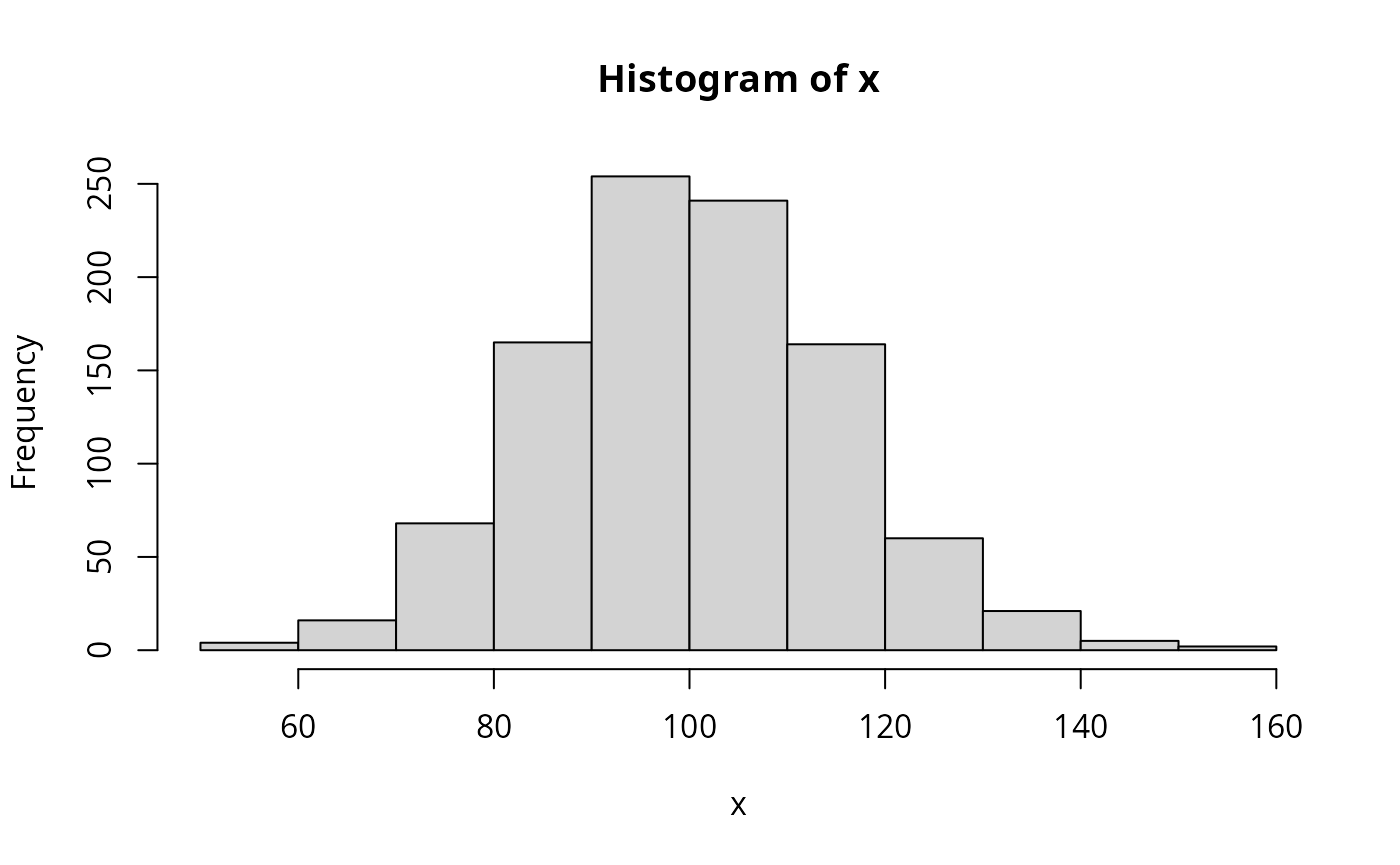
a Cumulative
Distribution Function. For example we can combine qnorm
and rand_num to simulate rnorm:
Same for discrete distributions: